Feed the lawn
Fertilization and turf-health programs matched to the property.
 Get an Estimate ↗
CARE BEYOND THE CUT
Lawn fertilization and pest care for Orlando and Central Florida properties. Thin turf, weeds and brown patches can have different causes—let’s arrange the right assessment and treatment through appropriately licensed providers.
Ask About Lawn Care
Lawn Fertilization & Pest Care
Thin growth, weeds, and pest concerns can have different causes. An appropriate provider assessment helps determine what to treat and how to work it into your maintenance schedule.
Ask About Lawn Care →HERE’S WHERE WE CAN HELP
Fertilization and turf-health programs matched to the property.
Weed control and lawn pest treatments through appropriately licensed providers.
Preventive programs and commercial turf-care planning.
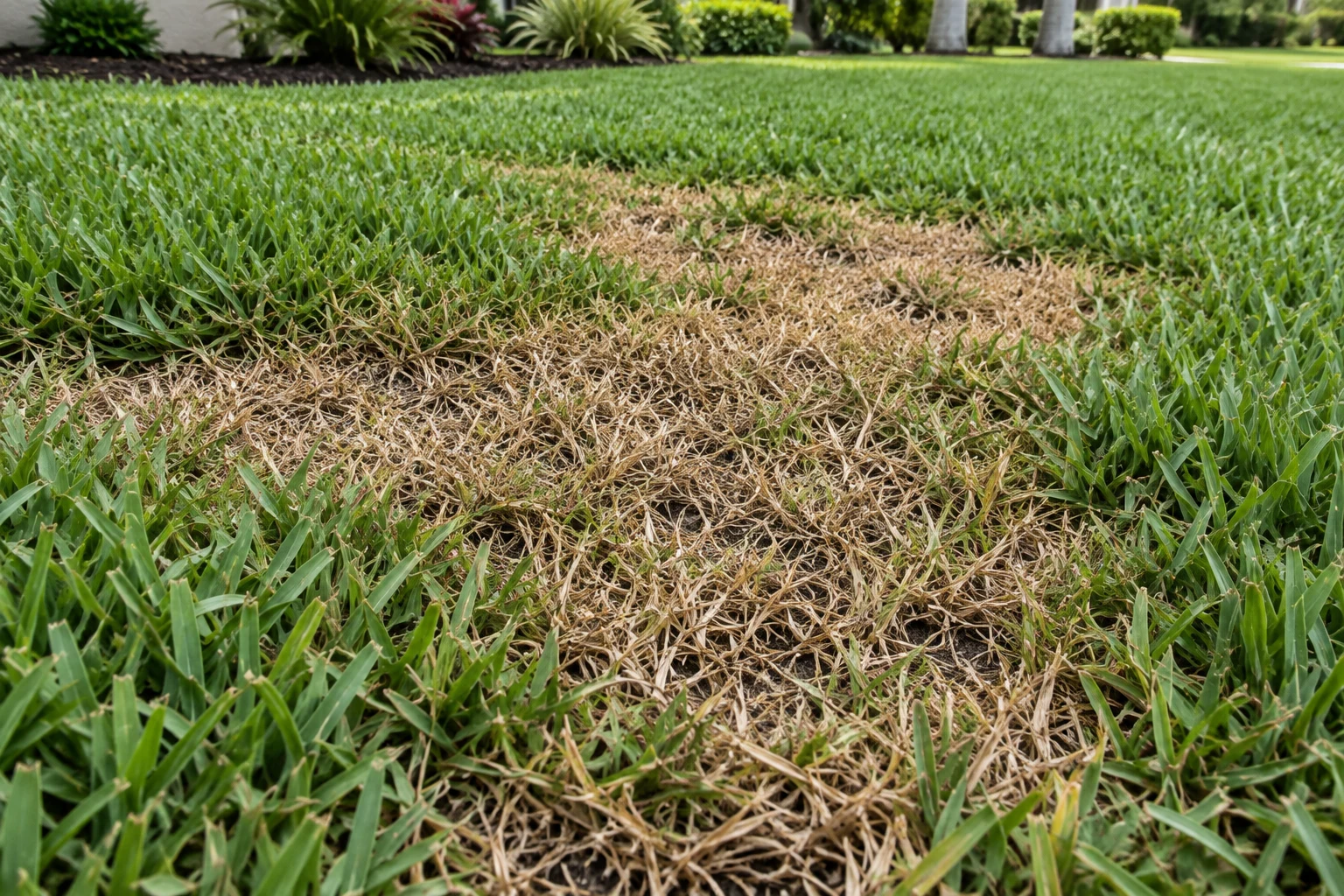
LOOK CLOSELY. TREAT THOUGHTFULLY.
Where is the lawn struggling? Are the changes recent or recurring?
Share the watering schedule, turf type if known, and any recent treatment.
Let the responsible licensed provider assess the issue before a treatment is selected.
LAWN PESTS · KNOW THE SIGNS. ACT EARLY.
New thinning, chewed grass or spreading brown patches? Let us know when you notice a change—there’s no need to wait for your next scheduled visit. We’ll help coordinate the right assessment.
In St. Augustinegrass, look for yellow-to-brown patches in sunny, dry areas. Tiny black-and-white adults may be visible where damaged turf meets green grass.
Near-surface tunneling can loosen roots and dry out turf. Watch for disrupted soil and thinning grass, especially in bahiagrass or bermudagrass.
Tan moths can be a clue; caterpillars do the feeding. Look for scraped or ragged blades and areas that appear freshly scalped. Activity is common from spring through fall.
Rolled blades and wilting may point to a watering problem. Pests, disease and irrigation issues can look alike—and occur together. A brown spot alone doesn’t identify the cause.
Check your lawn regularly, especially in warm weather. Take a wide photo and a close-up, note when the change started, and share your watering schedule and any recent treatments.
We coordinate regulated applications through appropriately licensed providers. Product choice, timing and any resistance-management plan depend on the confirmed pest and current label directions.
Learn more: UF/IFAS lawn insect guide and tropical sod webworm signs.
Regulated applications are performed by appropriately licensed providers. Treatment scope and application requirements are confirmed before service.
WHILE WE’RE TALKING OUTDOORS
Keep the grounds looking sharp, week after week. We’ll help build a maintenance plan that fits your property, your schedule, and the way you work.
A welcoming entrance. A tired bed brought back to life. A whole new direction. Let’s see what we can Git-Er-Dun for your landscape.
Branches getting too close? Planning a removal or a new planting? Let’s find the right next step for your trees and the property around them.
YOUR OUTDOOR TO-DO LIST STARTS HERE
From the regular upkeep to the bigger ideas.
Tell us what you need, and let’s take it from there.